5 product management documentation problems a connected system solves


Product teams rarely set out to create documentation chaos. It just happens gradually.
You might create a strategy deck for leadership or jot down a product requirements document in Google Docs or Notion. Decisions are made in Slack. Customer feedback sits in yet another separate system. Roadmap updates happen somewhere else. Before long, your team technically has documentation, but nobody has a single, reliable view of what is happening, why it matters, or what changed along the way.
This is becoming a bigger problem for modern product organizations. AI has accelerated engineering, but the hard part of product work is increasingly judgment, alignment, prioritization, and coordination. Teams need to understand which opportunities matter, how decisions were made, where trade-offs sit, and what context should guide the next move.
Documentation should support that work, but too often, it slows it down.
“For years, product teams have tried to solve documentation problems by creating more documents,” says Malte Scholz, Head of Product and co-founder of airfocus by Lucid. “But the real challenge is not volume, but connection. Product teams need documentation that stays close to the work, reflects changing decisions, and gives both humans and AI agents the context they need to move in the right direction.”
Here are five common product management documentation problems a connected system like airfocus can solve automatically.
can support your team.
Book a demo
1. Documentation lives in the wrong place
Most product teams don’t suffer from a lack of documentation, but rather a scattered assortment of documentation.
Strategy may live in a slide deck. Product decisions may be buried in Slack. Requirements may sit in a document that is linked from a ticket. Customer feedback may live in a separate insights tool. Roadmap context may sit in another platform entirely.
Individually, each of these tools may make sense, but together they create a fragmented product record. When a planning meeting arrives, the first job isn’t deciding what to prioritize, it is assembling the context needed to have the conversation.
That means product managers spend time hunting for the latest version of a document, checking whether a decision still stands, searching for the feedback that originally justified a feature, or asking colleagues to remember what happened in a meeting weeks ago.
The more complex the organization becomes, the worse this gets. In a multi-team product environment, documentation spread across disconnected systems can lead to duplicated work, inconsistent priorities, and decisions made with incomplete context.
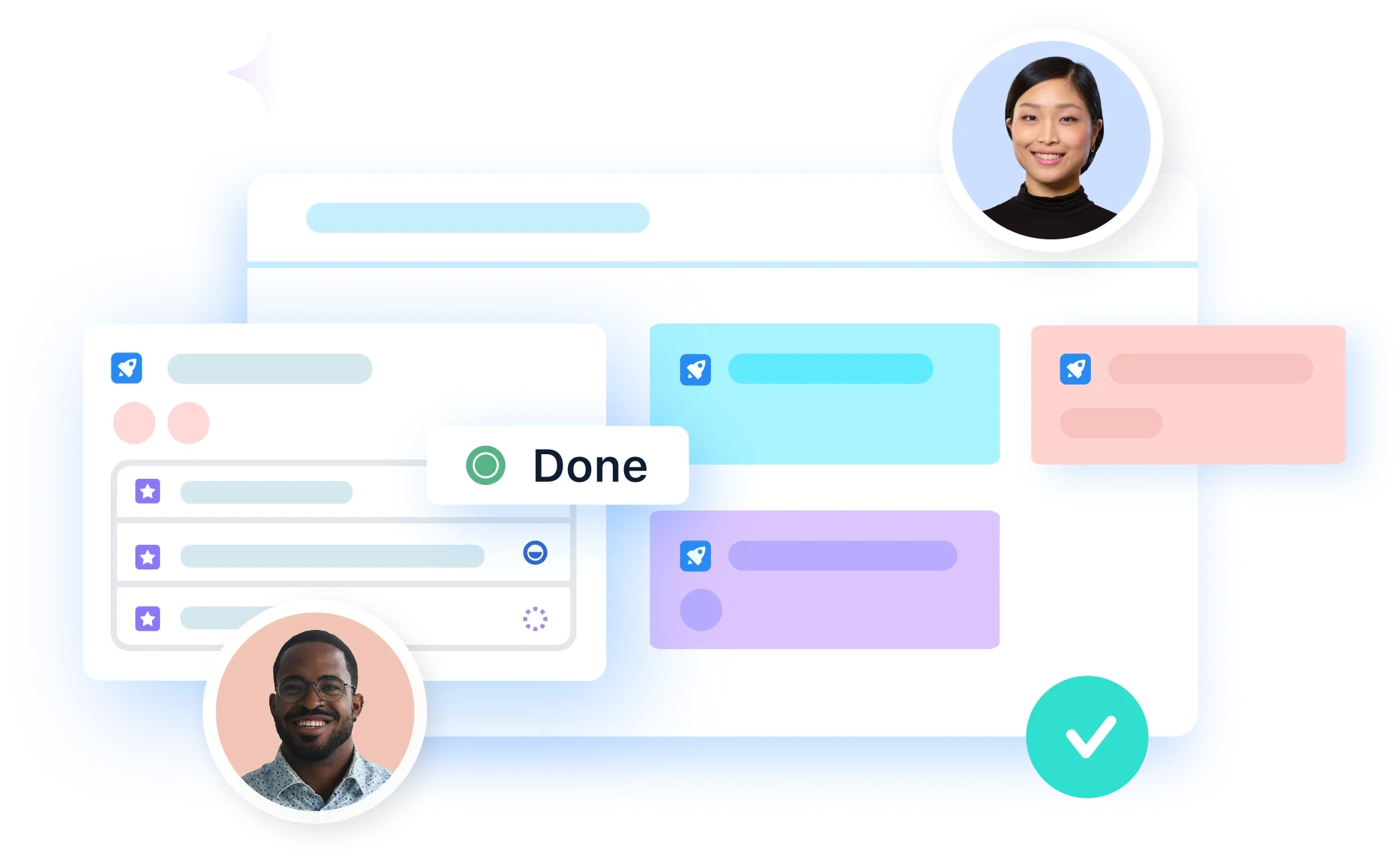
A connected product system changes the role of documentation. Instead of living in separate files and channels, documentation can sit directly alongside roadmap items, opportunities, feedback, requirements, and priorities.
The point isn’t simply to centralize files, but to connect your product management documentation to the product work it’s supposed to explain.
When documentation lives beside the work, teams do not need to reconstruct the story from scattered fragments. The system preserves the context automatically.


2. Documentation goes stale almost immediately
A product requirements document (PRD) can be accurate when it is written, and outdated only a week later.
This is because scope changes. Dependencies shift. Customer needs evolve. Leadership priorities move. Engineering uncovers a constraint. Sales brings in new market feedback. A decision that looked obvious in the first version of the document may no longer fit the current reality.
This is why so many product teams end up with versioned documents that nobody fully trusts. PRD v3 becomes PRD final. Then final becomes final-final. Then someone creates a new version because the old one no longer reflects what the team is building.
The problem isn’t that product managers are bad at maintaining documentation. It’s that static documentation is often detached from live product work. The document describes a moment in time, while the product continues to change.
That creates risk. Teams may plan around outdated information, and stakeholders may challenge decisions using old assumptions. Engineering may work from a requirement that no longer reflects the latest trade-off. Product leaders may struggle to understand whether roadmap items still map to current strategy.
A connected system reduces this gap by making documentation part of the living product record. Requirements, notes, context, and decisions can be attached to the item itself. When the work changes, the documentation can change with it.
This doesn’t remove the need for product judgment, but it does reduce the amount of manual maintenance needed to keep everyone aligned.
“The half-life of product documentation is getting shorter,” Malte says. “In fast-moving teams, a document that is disconnected from the work starts becoming outdated almost as soon as it is created.”
Connected documentation turns product knowledge from a static artifact into a live layer of context, making it easier for teams to see what has changed, what remains true, and what needs to be reconsidered.

3. The rationale behind decisions disappears
Product teams often remember what they decided, but they are less likely to remember why.
A feature may be prioritized because of a major customer request, a market shift, a strategic bet, or a dependency with another team, while a roadmap item may be delayed because the evidence was weak, the opportunity was too narrow, or another initiative had greater strategic value.
At the time, the reasoning may feel obvious, but months later, it rarely is.
The rationale behind product decisions often lives in meeting notes, Slack threads, old comments, or individual memory. If the person who remembers the decision leaves the organization, moves team, or simply forgets the details, that context disappears.
This is a major issue for product leaders. The quality of product work depends not just on the decisions teams make, but on the reasoning behind them. Without that reasoning, teams can repeat old debates, reopen settled questions, or lose confidence in the roadmap.
It also makes prioritization harder. If a team cannot see why something was prioritized, it becomes difficult to know whether the decision still holds. Was the initiative tied to current strategy? Was it based on strong customer evidence? Was it a tactical response to one large account? Was it a compromise made because of capacity?
A connected product system helps preserve the “why” behind the work. Feedback, insights, scoring, strategic goals, roadmap items, and documentation can be linked together, giving teams a visible trail from evidence to decision.
“The most valuable product context is often not what a team decided, but why they decided it,” Malte says. “When that rationale lives in someone’s memory, it becomes fragile. When it is connected to the work, it becomes part of the organization’s product intelligence.”
This is particularly important for larger product organizations, where decisions need to survive quarterly planning, leadership reviews, team changes, and shifting priorities. A connected system creates institutional memory that doesn’t depend on one person remembering the full story.

4. Documentation is disconnected from the actual work
Even when documentation exists, it often sits beside the work rather than inside it. The result is a product process held together by manual explanation. Every planning cycle starts with people recounting what customers said, what research showed, why the team chose one opportunity over another, what dependencies matter, and what has changed since the last review.
This slows teams down. It also introduces inconsistency. Different stakeholders may have different versions of the story. Some teams may have strong supporting context while others rely on broad claims. Product leaders may struggle to compare work across teams because the underlying evidence and assumptions are not captured in a consistent way.
Disconnected documentation also makes alignment harder. A roadmap item is a set of judgments about customer value, business impact, effort, risk, timing, and strategy. If the documentation that explains those judgments sits separately from the roadmap, the roadmap becomes harder to trust.
A connected system like airfocus gives product teams a way to bring the full product story together. Discovery, feedback, requirements, prioritization, roadmaps, and delivery context can be connected in one system, so documentation becomes part of how work progresses rather than an administrative layer added after the fact.
“Product management documentation should not sit beside the work as a separate administrative layer,” Malte says. “It should be part of the work itself. When feedback, prioritization, roadmaps, and requirements are connected, teams can see the full story behind every decision.”


5. AI tools cannot use context they cannot access
AI is changing product management work, but AI tools are only as useful as the context they can reach.
If documentation is scattered across disconnected systems, AI can help generate text, summarize individual documents, or draft requirements, but it can’t reliably support product judgment if it doesn’t understand the full picture.
That full picture includes strategy, goals, customer feedback, research, roadmap priorities, dependencies, previous decisions, and current trade-offs. If some of that context sits in a slide deck, some in Slack, some in a Word document, and some in a roadmap tool, AI agents are forced to work from fragments.
This just creates a new version of an old problem. One AI tool may have access to one piece of context. Another may have access to something else. Teams may copy and paste information between tools, hoping the AI has enough background to be useful. But the underlying system remains disconnected.


For product leaders, this limits the real value of AI. The real opportunity with AI is to help teams reason through prioritization, alignment, trade-offs, and decisions with the right context available, but that only works when product knowledge is connected and accessible.
A connected product system gives AI agents and humans a shared foundation. Documentation attached to live items, connected feedback, roadmap context, prioritization data, and decision history can all become part of the context AI can work with.
With airfocus, teams can use docs on items to keep documentation close to the work. The airfocus agent can support document creation and co-authoring in that context. And with the airfocus MCP server, product context can be made available to tools such as Claude, Copilot, and ChatGPT.
This is where connected product management documentation becomes the foundation for more useful AI in product management.
“As AI accelerates engineering, the bottleneck is shifting toward product judgment, alignment, and coordination,” says Scholz. “Connected documentation is important because it gives teams a shared foundation for those decisions. It turns product knowledge from scattered files into a living system.”




Jeff Meyer

Read also


Explore how airfocus can support your team