How product teams can defend roadmap decisions with data, not gut feel


There is a moment in almost every roadmap conversation when the real challenge appears.
A stakeholder asks why one feature made the roadmap and another did not. Sales wants to know why a customer request is still waiting. Leadership questions the timing of an initiative. Another team pushes for its own priority to move up the list. Suddenly, what looked like a product decision starts to feel like a negotiation.
This is where weak prioritization gets exposed.
It is not always because the team made the wrong call. It’s often because the reasoning behind the decision is not visible. When roadmap decisions live mostly in someone’s head, even a smart, evidence-based choice can sound subjective. And once the rationale feels vague, conversations quickly turn into pressure and opinion.
That’s why the real value of prioritization is being able to explain why a decision was made, what evidence informed it, and why one item rose above another.
can support your team.
Book a demo
Why roadmap decisions become hard to defend
Most roadmap items have a case behind them. One feature may unlock revenue. Another may solve a painful customer problem. A third may support a strategic initiative that leadership cares deeply about. In isolation, many requests sound reasonable. The difficulty comes when product teams have to compare them, sequence them, and explain why one deserves attention now while another has to wait.
That gets much harder when every stakeholder brings a different lens. Sales may focus on near-term deals. Customer-facing teams may focus on urgency. Leadership may focus on broader strategic goals. Product has to hold all of that together while still weighing effort, focus, dependencies, and long-term impact.


Without a clear framework, those decisions can look arbitrary from the outside. Product may know the reasoning, but if it cannot show that reasoning, it becomes much harder to defend.
Gut feel is not the same as judgment
This does not mean product leaders should stop using judgment.
Experienced teams will always need it. Not every roadmap call can be reduced to a formula, and not every important opportunity arrives with perfect data attached. Good product judgment still matters.
But judgment on its own is difficult to communicate.
That is the gap many teams run into. They aren’t relying purely on instinct, but they also don't have a visible structure that helps others understand the trade-offs behind the decision. The result is that roadmap conversations become more subjective than they need to be.
What better prioritization actually looks like
The strongest product teams don’t try to remove judgment from prioritization. They make it easier to explain.
That usually means bringing more structure to the decision by defining the criteria, weighing impact against effort, and connecting roadmap choices to real signals such as customer pain, reach, revenue implications, or strategic fit. Instead of asking whether something simply feels important, teams can show why it scores highly against the factors they care about most.

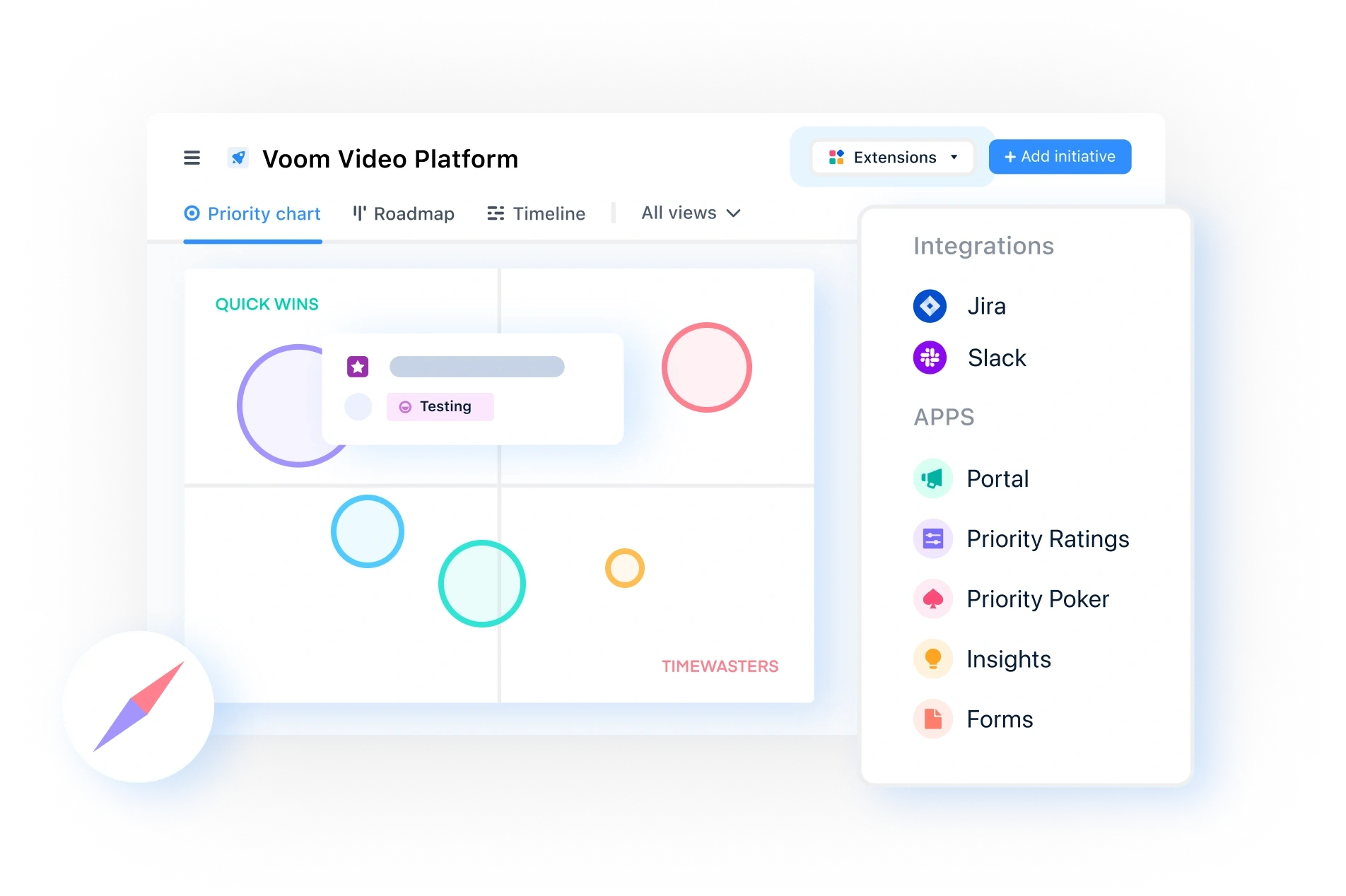
Patrick Denison, Customer Success Manager at airfocus, says this is where a more structured approach changes the conversation. With airfocus, teams can rate work against factors like effort, reach, ICP pain, or revenue impact, then use those weighted criteria to generate an overall prioritization score.
As he explains, “That score makes it much easier to show why one item has stronger support than another. It helps make the logic more visible.”
How airfocus helps teams defend prioritization decisions
This is where airfocus becomes more than a planning tool. Patrick explains that teams can build a prioritization model around the criteria that matter most to their business, rather than relying on a static list or a feeling that something sounds important. That means the decision framework reflects the product organization’s real priorities, whether that is strategic value, customer pain, revenue opportunity, or effort.
Just as importantly, those decisions do not sit in isolation. In airfocus, product teams can connect customer feedback directly to feature ideas and roadmap items, so when stakeholders ask why something is being prioritized, the team isn’t forced to answer in abstractions. They can point to the underlying signals.
That is one of the biggest advantages Denison sees in practice. “With airfocus, you’ve got the data there to justify and explain why you are prioritizing this feature,” he says. “You’ve also got customer feedback associated with it.”


Instead of defending a roadmap choice with a vague rationale, teams can show the score, the supporting evidence, and the logic behind the decision.
airfocus also helps because that logic stays connected to the roadmap itself. Teams aren’t defending decisions from a separate spreadsheet, slide, or one-off prioritization exercise that nobody else can see. The rationale lives alongside the work.
Why this gives product teams more confidence
Patrick argues that the structure airfocus provides changes how product leaders feel when they walk into stakeholder meetings.
As he explains, teams have more confidence because they know “where they are, where they’re going, and how they’re going to get there.” That matters when priorities are being challenged. Confidence doesn’t come from having all the answers. It comes from being able to show your reasoning.
And that doesn’t mean that disagreement disappears. Stakeholders may still push for different outcomes. But the conversation becomes healthier when product can make the trade-offs visible. Instead of arguing from instinct, teams can explain the criteria, the evidence, and the logic behind the call.
Data will not remove judgment, but it will make judgment easier to defend
Product prioritization will never be completely objective. Nor should it be.
There will always be decisions that require experience, context, and strategic judgment. But those decisions become far easier to defend when the judgment is supported by a visible framework rather than buried in someone’s head.
That is the real advantage of structured prioritization. It does not eliminate debate; it gives product teams a stronger way to navigate it.
airfocus helps product teams move beyond gut feel by connecting prioritization criteria, customer feedback, and roadmap decisions in one place, so the reasoning behind your roadmap is easier to show and defend.




Emma-Lily Pendleton

Read also


Prioritize with confidence